Wishing for a Brighter 2026: Putting Movement, AI, and Joy at the Heart of Education
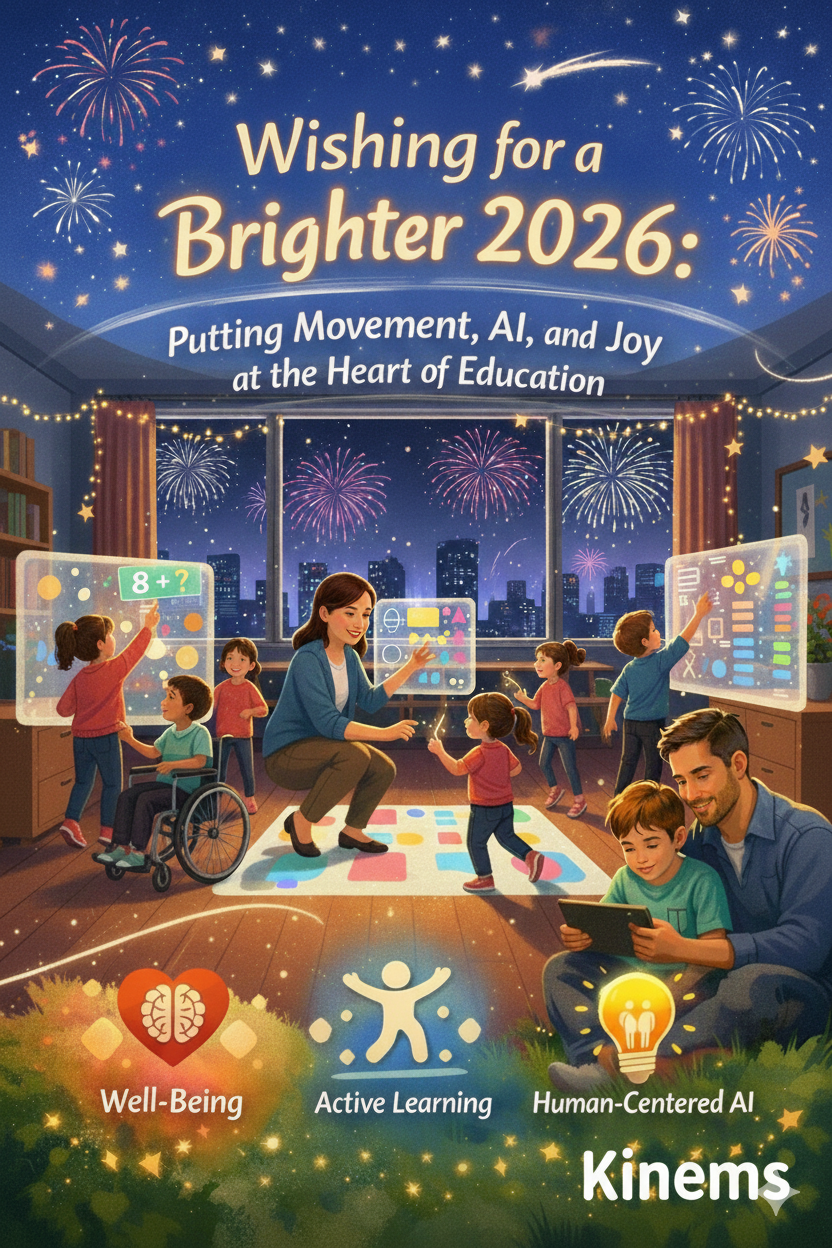 As 2025 comes to an end, the holiday season invites us to pause, reflect, and reconnect with what truly matters. For children, families, and educators around the world, this year has once again reminded us that learning is not only about academic achievement—it is about well-being, balance, connection, and joy.
In classrooms everywhere, teachers have been navigating rapid change and growing concerns around children’s physical health, emotional resilience, and engagement with learning. At the same time, families have been seeking learning experiences that support not just knowledge acquisition, but the whole child. As we look ahead to 2026, the message is clear: the future of education must be more human, more inclusive, and more joyful.
Learning in Motion: The Power of Active Screen Time
At Kinems, we believe that movement is not a break from learning—it is a powerful pathway to it. While concerns about sedentary behavior and passive technology use grow, Kinems offers a different path: active screen time. Grounded in research on embodied cognition and supported by intelligent technology, Kinems combines AI with purposeful movement to help children learn through their bodies as well as their minds.
Throughout 2025, we saw how movement-based, AI-supported activities helped children stay focused, motivated, and emotionally engaged. By transforming everyday learning moments into physically active experiences, we have found that joy is a powerful catalyst for academic growth. When children are physically involved in their lessons, they thrive—especially neurodivergent learners and children who struggle with traditional, sedentary classroom approaches.
AI That Supports Teachers, Not Replaces Them
As conversations around AI in education continue to evolve, one principle remains central to our vision: technology should empower teachers, not overwhelm them. Kinems’ AI is designed to support educators by adapting activities to students’ needs, offering actionable insights, and reducing the cognitive and administrative load that so often leads to burnout.
In 2025, teachers told us that what they valued most was relief—relief from one-size-fits-all instruction, relief from disengaged learners, and relief from the feeling that well-being comes second to performance. Looking toward 2026, we remain committed to building AI that respects teachers’ professional judgment and amplifies their impact in the classroom.
Families as Partners in Learning
Families are not just supporters of learning—they are essential partners in it. At Kinems, we deeply value the role families play in children’s development and well-being. Their insights, care, and involvement are vital in shaping meaningful and sustainable learning journeys.
In 2026, our commitment is to strengthen this partnership even further. We will actively explore new, efficient ways to build a stronger bridge between school and home—using AI and movement-based learning to create shared experiences that support children consistently across every context of their lives.
A New Year, A Shared Wish
As we welcome 2026, our wish is simple yet powerful:
- For children to grow with confidence, curiosity, and the joy that comes from active learning.
- For teachers to feel supported, inspired, and valued as they lead the way.
- For families to experience learning as a source of well-being, not pressure.
A brighter future in education is not built by technology alone. It is built by thoughtful innovation, human-centered design, and a deep commitment to the whole child. At Kinems, we look forward to continuing this journey—moving, learning, and growing together.
From all of us at Kinems, we wish you a peaceful, joyful, and inspiring New Year.